

The UK’s 2025 Defence Industrial Strategy (DIS) and follow-on 2026 policies mark a turning point for defence suppliers. Key elements include steep defence budget rises (to ~£62 bn in 2025/26, rising to ~£73.5 bn by 2028/29), a firm 2.6% GDP target (3% by next Parliament), and major procurement reforms. The DIS’s six priority goals – from making defence “an engine for growth” to transforming procurement systems – signal big changes.
Procurement will be segmented (major platforms vs rapid projects) under a new National Armaments Director, with faster timelines and SME-friendly approaches. Export credits, innovation funding (a new £400m fund), and a “buy British” stance are being bolstered. For industry, this means prime contractors can expect sustained long-term projects (ships, jets, nuclear) and new roles (e.g. sovereign warhead, quantum AI), while SMEs should see more set-aside contracts, faster payments and growth opportunities (UKDI innovation body, SME Office).
This report analyses the DIS and 2026 updates, covering funding changes, procurement pathways, impacts on SMEs vs primes, supply-chain and skills issues, export impacts, likely winners and suggested actions.
Policy Background: The Defence Industrial Strategy and 2025–26 Updates

The DIS (published Sep 2025) builds on the June 2025 Strategic Defence Review (SDR) and the UK’s Integrated Review. It declares defence a national growth sector with ~272,000 jobs (70% outside London). Its six aims, “engine for growth”, backing UK firms, leading innovation, resilient industrial base, procurement reform, and enduring partnerships, set the framework. To back this, the government confirmed defence spending of 2.6% GDP by 2027 (cross-party goal of 3% by early 2030s). The 2025 Spending Review allocates ~£62.2 bn in 2025/26, rising to £73.5 bn by 2028/29 (11.8% real increase). A record share of this will be capital investment (43% by 2028/29) funding ships, subs, munitions, drones, a new nuclear warhead, etc.
Specific allocations include £15 bn for a sovereign warhead, £6 bn for munitions, ~£4 bn for drones/autonomy and £1 bn for directed-energy weapons. (Exact figures beyond this are often unpublished; for example, MoD has not disclosed total R&D spend, but it is assumed in the low single-figure billions.) In sum, official sources highlight robust budget growth and a pivot to high-tech, sustainable supply chains.
The policy package also includes: the Procurement Act 2023 (effective 2024/25) requiring fairer SME access, ringfencing of small contracts and 30‑day payment terms; a future Defence Investment Plan (DIP) due by late 2026 to detail all major programmes; and the new UK Defence Innovation agency (launched July 2025) to speed cutting-edge R&D. Export support is being enhanced: UK Export Finance lending capacity will rise to £10 bn (with ~£3 bn ringfenced for defence), and a new Office of Defence Exports in MOD will centralise export promotion.
The government also signed a UK–EU Security & Defence Partnership (May 2025) to ease the UK industry’s access to EU projects. In short, the environment is moving towards more spending, faster procurement, and targeted support for UK-based suppliers while balancing global partnerships.
Key Funding and Procurement Changes
UK defence spending is rising sharply. The FY2025 Spending Review (announced June 2025) commits to real-terms increases across the decade.

The MoD budget of ~£60 bn in 2024/25 is planned to reach roughly £66–68 bn by 2028/29 (real terms). This includes large uplifts: e.g. the Navy received 2.6% GDP target (vs 2.3% now), with about £6 bn extra for nuclear submarines and £4.5 bn for munitions. Capital spending is explicitly prioritised (capital now ~43% of spend), reflecting emphasis on new equipment (ships, drones, satellites). In addition to baseline budgets, funding is allocated to designated “doctrine” items: £15 bn for a new UK warhead programme (inside Parliament), plus large sums for accommodation, cyber, and innovation. If these toplines shift, the article has assumed no cuts beyond announced levels.
Procurement reform is just as significant as dollars. The DIS mandates a segmented acquisition approach: major platforms (Type 26/31, FCAS, etc), “pace-setting” upgrades, and rapid projects (cyber, drones) each get tailored timelines and rules. A new National Armaments Director (NAD) (Rupert Pearce) has been given end-to-end authority over all non-nuclear procurement, consolidating eight separate budget lines. The NAD must publish a clear Defence Investment Plan (DIP) and a rolling Acquisition Pipeline to give industry certainty. As Luke Pollard (Defence Readiness Minister) said, procurement should move from contract initiation to award in “as little as three months”, with “stupid rules” removed. A dedicated Office for Small Business Growth (MOD SME office) was announced to implement these SME-friendly changes. In practice, this means easier tendering for under‑threshold contracts, more frameworks specifically for SMEs, and mandatory barrier reviews.
Other notable changes: 30-day payment terms now extend to subcontractors from Oct 2025; modern slavery and cybersecurity rules are tightening supplier requirements. The Government will also leverage industrial strategy tools (National Wealth Fund investment, British Business Bank equity schemes) to de-risk capital-intensive projects. In exports, UKEF is expanding support (e.g. loans/insurance for foreign orders), and a new Office of Defence Exports in the Ministry of Defence will help suppliers globalise
Implications for SMEs vs Prime Contractors
The DIS’s SME focus means major new opportunities for smaller companies, but also new expectations. We compare 6 key dimensions below:

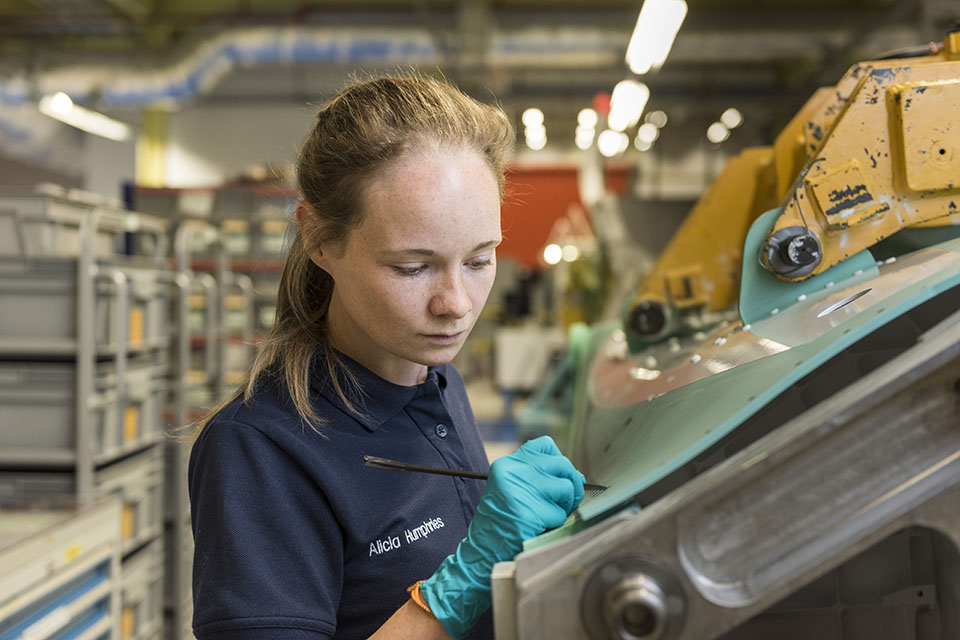
Diverging roles of prime contractors and SMEs within the UK defence supply ecosystem
| Dimension | SMEs | Prime Contractors |
|---|---|---|
| Access to contracts | More set-asides and smaller lots (below-threshold deals). Many procurements will be chunked or scoped for SMEs. However, primes will still win the largest platforms and major support contracts. SMEs typically enter projects as subcontractors or via collaborative bids. | Can bid for (and often secure) the largest MOD contracts (ships, aircraft, cyber networks) directly. Designated as “UK Strategic Partners”, they negotiate at the cabinet level. However, primes now face more competition for sub-system contracts as MOD encourages diversity. |
| Capital and investment | Often constrained. SMEs rely on bank loans, venture capital, Innovate UK grants or BBIC investment. The new strategy acknowledges this: e.g. BBB scale-up funds (even if not defence-specific) and NAD’s pipeline info should make SMEs more bankable. Still, major R&D programs may be hard to self-fund without partners. | Strong balance sheets or access to markets. Primes like BAE or Babcock can self-fund or issue debt to invest in UK facilities. They also attract institutional investors (pension funds, etc) and can co-invest in capability development (e.g. joint ventures like Avio Aero). However, they may rely on government advance funding or export orders for very large projects. |
| Compliance and regulation | Heavy compliance burden relative to size. Many SMEs struggle with security clearances, IFRS/GAAP, quality standards (ISO, AQAP) and export control rules. The DIS aims to smooth this (e.g. guidance offices), but SMEs will need help navigating them. Non-compliance risks losing contracts. | Sophisticated compliance regimes are in place (dedicated teams, auditors). Primes have long experience meeting MoD cyber/cybersecurity, safety, and export rules. They also handle complex international ITAR/EAR export controls. Primes will likely help their tier-2/3 suppliers with these processes as part of supply-chain support. |
| R&D and innovation | Nimbler, can innovate quickly in niche tech (AI, autonomy, sensors). Many rely on grants (Defence Innovation Fund, InnovateUK, Regional Growth Deals). UKDI and DDR&O focus may give them direct routes to prototype funding. But they often lack capital and must partner or license technology. | Large R&D budgets and facilities (e.g. BAE’s £1bn+ UK R&D investment). They undertake major technology programs in-house (Stealth, propulsion, PNT). Primes often shepherd SME innovation: BAE’s FalconWorks hub partners with SMEs like Malloy Aeronautics to co-develop UAVs. Thus, primes amplify SME tech via joint ventures or COTS integration. |
| Partnerships and scale | Must often collaborate or form consortia to handle big projects. Will join industry clusters (regional defence growth deals) or federate in supply networks. SMEs stand to benefit from Industry Growth Partnerships (DGP) and MOD’s mentoring of smaller firms. | Lead and finance consortia (e.g. Tempest team, submarines). Frequently partner internationally (AUKUS, NATO projects) and on cross-sector innovation (Space Hub, autonomous trials). Primes will also take equity stakes in tech start-ups and incubate SME talent (as BAE did via investments). |
| Timelines and agility | Can often execute smaller projects faster or provide rapid technical fixes. The new “Rapid Commercialisation” segment favors agile SMEs. But SMEs may also be vulnerable to delayed prime schedules (e.g. if a ship program slips). Cashflow timing and long payment lags have been issues, though Procurement Act reforms (30-day terms) will help. | Primes work on multi-year development cycles (5–10+ year programs). They plan for long-term sustainment. They often absorb schedule risk through extended in-house test/evaluation. Under DIS timelines, primes will be pushed to shorten cycle times but will leverage their scale (e.g. BAE on Tempest with multiple global partners) to do so. |
Procurement Pathways and Timelines
The Defence Investment Plan (DIP) will detail all major procurement streams over the next 5–10 years. In the interim, several flagship programs define the pipeline:
- Naval Shipbuilding: Work continues on the Type 26 frigates (8 for RN, plus exports). In Aug 2025 Norway ordered five Type 26s (£10 bn export deal). Type 31 (light frigates) and Type 83 (future destroyers) follow. Nuclear submarines remain top priority: Dreadnought (SSBN) moving into production and SSN-AUKUS project (with US/AUS) will drive sub contracts for decades. Babcock and BAE will lead shipyards, with SMEs in outfitting, combat systems, C4ISR.
- Air and Space: Typhoon fighter upgrades (IPA6) proceed, while F-35 sustainment and future Block 4 tech loom. The Team Tempest FCAS (with Italy/Japan) is early-stage but backed by government. UAV and missile demand is rising (Pollard highlighted urgent air-defence needs). Space is growing: UK plans new satellites (e.g. Skynet 6, ISTARI, and space-based comms) which prime systems integrators like Airbus-UK and commercial partners will build.
- Land Systems: Boxers (armoured vehicles) are under contract; the Scout SV/Ajax replacement and new artillery programs (ATMOS, artillery shells for Ukraine) are in play. Babcock, Rheinmetall, and Thales are among the manufacturers. There is also emphasis on soldiers’ equipment and support vehicles (Procurement Act may open up modular acquisitions here).
- Cyber/Electronic Warfare & C4ISR: Increased funding for cyber defence, AI-enabled drones, sensors and communications (including Palantir “Project Mosquito” with MOD). Primes (Thales, Leonardo) will lead major contracts, but SMEs specialising in cyber and space tech have room under the DIS innovation drive.
- Munitions & Missiles: With UK aid to Ukraine and home defence in focus, munitions capacity is a surge sector. The government has promised funding for explosive plants and missile production (industrialists like MBDA, Nammo, and others will compete). A new munitions stockpiling program is expected.

Timelines will be faster than in the past: as a CMS advisory notes, weeks instead of years for some procurements. Shorter projects (quick buys of kit) will be run alongside long-term programs. Companies should watch for DIP release (likely late 2026) and closely monitor the published Acquisition Pipeline and Pipeline seminars from MOD (already announced to be quarterly). Engaging early with NAD and UKDI (e.g. through MOD offices or TechUK events) can help companies align their bids.
Sovereign Capability vs Global Supply Chains

The DIS strikes a balance between on-shoring and global partnerships. Government rhetoric emphasises “UK-based industry” but accepts global supply chains for resilience. Core capabilities are expected to be sovereign where critical: e.g. nuclear technology remains UK-controlled (new warhead, AWE facility roles). Key platforms (jets, submarines, missiles) will have UK prime leadership and heavy UK content.
At the same time, the DIS explicitly encourages export partnerships (Norway Type 26, Taiwan helicopter bids, etc.) and foreign investment in the UK. Even traditionally US-led systems (F-35, Abrams tanks) have UK firms in the supply chain. The government will enforce “Resilience” clauses (encouraging alternatives for key parts like semiconductors, batteries). A proposed flexible “offset” policy (inspired by Australia) may require foreign primes to reinvest in UK industry. Companies should therefore build relationships with UK partners or set up UK subsidiaries if wishing to bid on major contracts, which may now favour those willing to localise talent and manufacturing (echoing CMS insight on startups moving to the UK)
Skills and Workforce Implications
Talent is a recognised bottleneck. The DIS emphasises STEM investment and training (new skills initiatives are being funded), and firms are reacting. For example, BAE Systems reports having 111,400 employees (≈40% in the UK) and has invested over £1 bn in UK training and apprenticeships since 2020. Thales UK similarly sustains ~24,000 UK supply-chain jobs, with new programs for grads and veterans to bolster the pipeline. The government’s Defence Skills Taskforce (chaired by industry) is addressing shortages in cyber, engineering and naval skills.
For suppliers, this means a war for talent. SMEs will need to compete with big primes for rare skills (AI experts, nuclear engineers) or position themselves as training hubs for big contractors. Primes and larger firms must ramp up recruitment and retention: e.g. Babcock notes it is the UK’s largest employer of veterans. The Army and Air Cadets partnerships, dedicated apprenticeships (like Thales’s Skills Academy in Glasgow) and scholarship schemes are all avenues. In short, expect government grants and programs to help fill roles (e.g., £23 million in new training budgets announced for STEM and tech roles in 2026) – companies should tap into these.

Shortages could delay projects, so clear planning is vital. Defence primes often run their own training (e.g. BAE’s apprenticeship academies), and they may invite SMEs to co-train staff. Social value requirements (e.g. 10% apprenticeship targets on contracts) will mean everyone in supply chains must commit to hiring and upskilling workers. Suppliers should begin talent initiatives now, perhaps partnering with universities or colleges (MOD is fostering “Defence Centres of Expertise” regionally) to ensure they can meet throughput demands.
Exports and Export-Control Impacts
Britain’s defence exporters stand to gain. The DIS explicitly supports exports (e.g. facilitating Type 26 deals) and streamlines export controls. Pollard noted the global footprint: “Typhoon alone helps employ >20,000 people across 330 UK firms, and a similar number in the F-35 supply chain”. This underscores how export orders (e.g. to Turkey, Romania) feed the UK domestic base. UK Export Finance’s raised cap (£10 bn) and ringfenced defence funds mean more working capital for overseas sales. Plus, a new Office of Defence Exports (moving from DBT to MOD) will offer integrated legal/commercial support for deals.

Copyright: Andy Amor.
Export controls are being recalibrated post-Brexit. Companies must still navigate international regulations (ITAR/EAR for US tech, “UKCA” changes, new EU-UK SAFE arrangements). The new Security & Defence Partnership (May 2025) should ease some of the friction by allowing UK firms to join EU projects and vice versa. However, sensitive tech (dual-use) will still be tightly controlled. Suppliers should engage early with export licensing bodies (MOD’s International Defence and Security team) and consider UKTI/DIT export services – incentives (like the new DIT Defence Growth Partnership) exist to promote UK arms in markets like Australia, Japan and the Middle East.
Likely Winners and Market Segments
Prime contractors with strong UK ties will be key beneficiaries. BAE Systems (a third of its £30.7 bn sales from the UK) has its entire Typhoon/Tempest franchise aligned with UK plans; it will gain from jet upgrades, the F-35 sustainment hub, and exports (Typhoon to Turkey). Babcock is uniquely positioned in naval and nuclear (the largest UK nuclear support provider) – the upsized submarine fleet (including AUKUS subs) and warhead program will flow through its yards. Thales UK (with 23.8k jobs supported) sees growth in sensors, PEL and soldiers’ systems, aided by government R&D partnerships.
Mid-tier firms also see big chances. Leonardo UK (rotorcraft, ISTAR) should win UK helicopter work (e.g. a possible Chinook recap, AUKUS helos). MBDA UK (missiles) will ride the missile-building surge; Raytheon UK for air defence radars; QinetiQ and Chemring in specialist sectors; and north-west firms like DP World and Babcock’s Tyne yards in ship construction. Emerging tech startups in AI, autonomy and cyber (often spun out of universities) may capture small but fast-growing niche contracts, supported by UKDI funding. Regional clusters (e.g. Glasgow for naval tech, Sheffield for steel/hard goods, the North-West for AI/semis) will see targeted investments via Defence Growth Deals.



Recommended Actions for Suppliers
- Engage with Government Plans: Review the published DIS and upcoming DIP. Sign up for MOD pipelines (via Desider in DPS) and NAD-led consultations. Contribute to public consultations on the Defence Finance and Investment Strategy (due early 2026) to voice capital needs.
- SMEs: Join industry associations (ADS, techUK Defence Council) to access training on new rules. Use the new SME Office (expected 2026) as a gateway. Look for sub-contracting on big projects (e.g. reach out to primes bidding on Type 26/31, Ajax, etc.) and into MOD frameworks at lower thresholds. Consider UK “innovation competitions” (e.g. DIU, R&D grants) to prove tech.
- Primes: Audit supply chains for critical items (metals, chips, etc) and build redundancies. Invest now in UK capacity (e.g. specialist factories) to align with “engine for growth” goals. Double down on R&D centers in UK, leveraging UKDI freedoms. Partner with SMEs and startups to co-develop new capabilities (as BAE did with Malloy Aeronautics). Ensure strong UK content in bids to win political support.
- Cross-sector Collaboration: Seek co-investment models (e.g. venture capital in defence tech spurred by the Defence Growth Partnership). Explore export alliances via the UK–EU pact and AUKUS collaboration (e.g. UK–Australia joint ventures in shipbuilding).
- Skills and Community: Enhance workforce development (apprenticeships, veteran hiring) to meet DIS social requirements. Engage with MOD’s Social Value targets and highlight any upskilling or community programs in bids.
- Content Marketing and Outreach: Use clear communications to highlight UK benefits of your capabilities (e.g. “strengthening UK steel in our warship parts”) – the government favours visible British value. Build relationships with new MOD bodies (Office of Defence Exports, SME Office, UKDI).
By aligning business plans to the DIS goals and DIP pipelines now, suppliers can position themselves for the wave of investment coming in 2026–2030. Diligent monitoring of government announcements and active participation in defence networks will be crucial.

Sources & References
All content is based on official UK Government publications, Ministry of Defence strategy documents, company annual reports, and established defence industry analysis. Full source list is provided below for verification and further reading.
UK Government & Defence Policy
UK Ministry of Defence – Defence Industrial Strategy (DIS) 2025
https://www.gov.uk/government/organisations/ministry-of-defence
Defence Industrial Strategy: Making Defence an Engine for Growth (2025)
https://www.gov.uk/government/publications/defence-industrial-strategy-2025-making-defence-an-engine-for-growth
Integrated Review Refresh 2023
https://www.gov.uk/government/publications/integrated-review-refresh-2023
UK Parliament Research Briefing – Defence Spending Plans 2025–2029
https://researchbriefings.files.parliament.uk
UK House of Commons Library – Defence Sector Briefings
https://commonslibrary.parliament.uk
UK Government Procurement Policy Notes (PPN Collection)
https://www.gov.uk/government/collections/procurement-policy-notes
Defence Spending & Budget Context
UK defence spending is forecast to reach approximately £62.2bn in 2025/26, with sustained capital investment growth across the Spending Review period (UK Parliament Research Briefing, 2025).
Defence Industry Prime Contractors
BAE Systems
https://www.baesystems.com
Babcock International
https://www.babcockinternational.com
Thales Group
https://www.thalesgroup.com
Rolls-Royce Holdings
https://www.rolls-royce.com
Defence Analysis & Industry Insight
Royal United Services Institute (RUSI)
https://www.rusi.org
International Institute for Strategic Studies (IISS)
https://www.iiss.org
ADS Group UK – Aerospace, Defence, Security & Space
https://www.adsgroup.org.uk
Eversheds Sutherland – Defence Industrial Strategy Analysis
https://www.eversheds-sutherland.com
CMS Law – Defence Industry Commentary
https://www.cms-lawnow.com
Strategic Policy Signals (Summary Context)
Across UK MOD and defence industry publications, key themes include:
- Expansion of sovereign defence capability (nuclear, munitions, autonomy)
- Procurement reform focused on faster contracting cycles
- Increased SME participation in defence supply chains
- Strengthening domestic industrial resilience in critical materials
- Growth in long-term lifecycle and support-based contracting models
Key Government Policy Signals (from DIS & speeches)
Across UK MOD and defence industry publications, key themes include:
- Expansion of sovereign defence capability (nuclear, munitions, autonomy)
- Procurement reform focused on faster contracting cycles Increased
- SME participation in defence supply chains
- Strengthening of domestic industrial resilience in critical materials
- Growth in long-term lifecycle and support-based contracting models
Leave a Reply